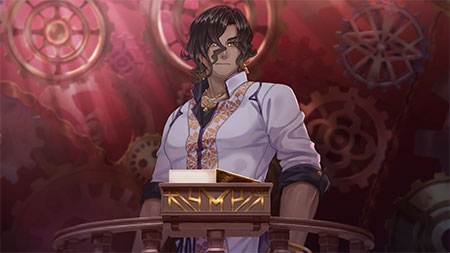
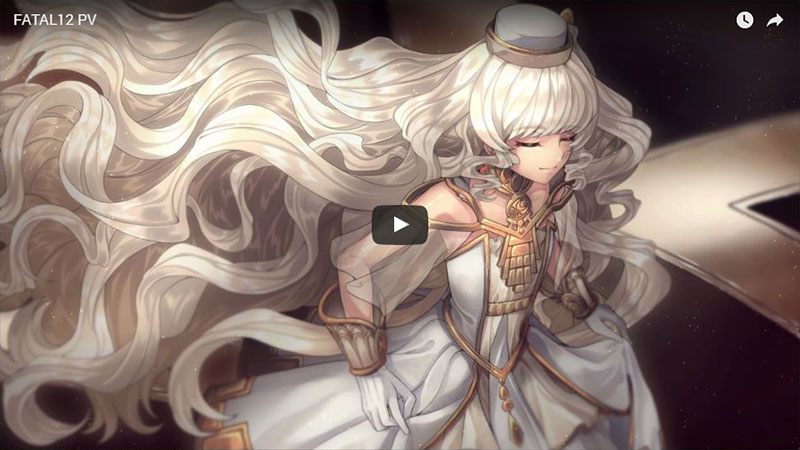
"Good evening, my lovely little slaves to fate."
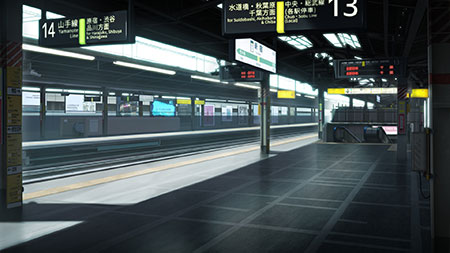
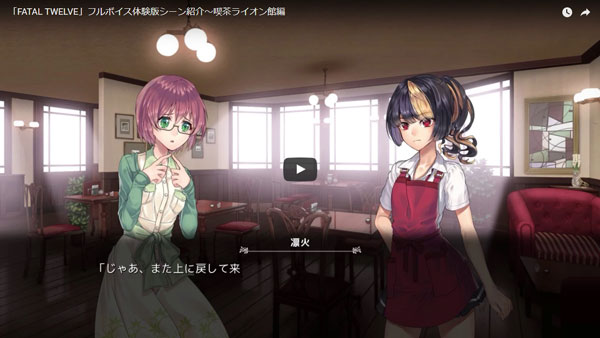
Shishimai Rinka was a highschooler who ran a small café named Lion House in place of her grandmother. She lived her life much like any other person her age, but one day, she was caught up in an explosion while returning home on the train alongside her friend, Hitsuji Naomi. In an attempt to save her friend's life, she shields her on instinct the moment the explosion goes off, losing her life in the process. However, before she knew it, she was back at Lion House, happily chatting with her friends as if nothing had happened in the first place.
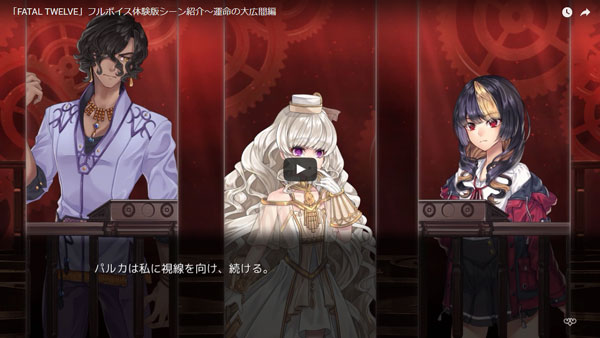
A few days later, she found herself in a strange world. Here she met Parca, an odd girl claiming to be a goddess. It turns out that she had somehow become a participant in Divine Selection, a ritual carried out over twelve weeks by twelve people, which allowed them to compete in order to undo their deaths. What shocked Rinka most of all, however, was the presence of her friend Mishima Miharu amongst the twelve.
In order to make it through Divine Selection, one must eliminate others by gathering information regarding their name, cause of death and regret in the real world, then "electing" them.
This turn of events would lead to her learning about the truth behind her death, as well as her own personal regrets. She would also come to face the reality that Miharu was willing to throw her life away for her sake, as well as the extents to which the other participants would go to in order to live through to the end.
Far more experiences than she ever could have imagined awaited her now, but where will her resolve lead her once all is said and done...?
. A truly powerful scene is rarely an accident; it is the result of deliberate choices in writing, performance, and technical craft that align to create a visceral impact on the audience. 🎬 Elements of a Powerful Dramatic Scene
The Architecture of Awe: Deconstructing the Powerful Dramatic Scene in Cinema Author: [Your Name/AI Assistant] Date: October 26, 2023 Subject: Film Studies / Dramatic Theory real rape scene updated
A truly powerful dramatic scene is rarely an accident; it is the result of careful structural engineering. Dramatic tension relies on high stakes and conflicting motivations. When two characters want completely different things, or when a single character faces an impossible moral dilemma, the subtext becomes charged with electricity. Dramatic tension relies on high stakes and conflicting
This is not a scene of action; it is a scene of moral collapse. The power is derived from the audience’s realization that Michael is "cleansing" his soul while damning it. The editing forces the viewer to process two contradictory realities simultaneously: the spiritual and the profane. It creates a dramatic irony so potent that the viewer becomes complicit in Michael's rise to power, understanding the blood cost that the character refuses to speak aloud. The power is derived from the audience’s realization
The dialogue mimics real-world arguments, starting with small grievances and ending in cruel insults.
Secondly, powerful drama thrives on revelation—not just of new information, but of hidden truth. The most searing scenes act as emotional autopsies, peeling back the skin of a character to expose the raw, beating heart beneath. In Good Will Hunting (1997), the "It’s not your fault" scene on a park bench achieves this with devastating simplicity. For the entire film, Will Hunting has deflected intimacy and sabotaged opportunity, using his intellect as a shield. When his therapist, Sean, repeats the phrase "It’s not your fault" over and over, Will’s defensive jokes crumble. The repetition is not a gimmick; it is a relentless dismantling of a lifetime of abuse and shame. The power of the scene lies in the gradual, wrenching transition from Will’s smirk to his tears—a public collapse into vulnerability that he has spent years avoiding. It is powerful because it captures a universal human desire: to be absolved of a guilt we did not create, and to finally let someone see us whole, scars and all.

. A truly powerful scene is rarely an accident; it is the result of deliberate choices in writing, performance, and technical craft that align to create a visceral impact on the audience. 🎬 Elements of a Powerful Dramatic Scene

The Architecture of Awe: Deconstructing the Powerful Dramatic Scene in Cinema Author: [Your Name/AI Assistant] Date: October 26, 2023 Subject: Film Studies / Dramatic Theory
A truly powerful dramatic scene is rarely an accident; it is the result of careful structural engineering. Dramatic tension relies on high stakes and conflicting motivations. When two characters want completely different things, or when a single character faces an impossible moral dilemma, the subtext becomes charged with electricity.
This is not a scene of action; it is a scene of moral collapse. The power is derived from the audience’s realization that Michael is "cleansing" his soul while damning it. The editing forces the viewer to process two contradictory realities simultaneously: the spiritual and the profane. It creates a dramatic irony so potent that the viewer becomes complicit in Michael's rise to power, understanding the blood cost that the character refuses to speak aloud.
The dialogue mimics real-world arguments, starting with small grievances and ending in cruel insults.
Secondly, powerful drama thrives on revelation—not just of new information, but of hidden truth. The most searing scenes act as emotional autopsies, peeling back the skin of a character to expose the raw, beating heart beneath. In Good Will Hunting (1997), the "It’s not your fault" scene on a park bench achieves this with devastating simplicity. For the entire film, Will Hunting has deflected intimacy and sabotaged opportunity, using his intellect as a shield. When his therapist, Sean, repeats the phrase "It’s not your fault" over and over, Will’s defensive jokes crumble. The repetition is not a gimmick; it is a relentless dismantling of a lifetime of abuse and shame. The power of the scene lies in the gradual, wrenching transition from Will’s smirk to his tears—a public collapse into vulnerability that he has spent years avoiding. It is powerful because it captures a universal human desire: to be absolved of a guilt we did not create, and to finally let someone see us whole, scars and all.